Flying home from a recent furniture market, one theme kept circulating through my mind: the vital role that outdoor spaces play in our health and wellness. And this goes right along with a term that I’ve been hearing in the design world over and over recently, neuro-aesthetics. Neuro-aesthetics is the intersection of neuroscience and aesthetics, the study of how our brains respond to beauty and design. Basically, the spaces we spend time in, and how aesthetically pleasing they are, directly affect how we feel.
With screens competing for our attention at every turn and information coming at us nonstop, protecting our mental and physical health has never been more important. Our phones have literally become a part of us, not to mention all the other technology available to us. And now we have the onslaught of AI.
Many of us are recognizing the need to disconnect from technology and reconnect with our bodies, minds, and other humans. And what better place to do that than outdoors—whether in our own backyard, on a restaurant patio, or in a thoughtfully designed community space?
The Science of Biophilic Design and Outdoor Wellness
Most of us have heard the term biophilic design, which is the design approach that incorporates natural elements into the indoors to improve well-being, cognitive function, and stress reduction. Just as when we spend time outdoors, it gives us a chance to reconnect with nature and ourselves. The health benefits of spending time outside aren’t just anecdotal—they’re backed by solid scientific research. Studies have shown that even brief exposure to natural elements can significantly improve our mood and reduce stress. The practice of “grounding”, or walking barefoot on grass or soil, has been linked to reduced inflammation and improved sleep. Fresh air increases oxygen flow to the brain, enhancing focus and creativity. A simple ray of sunlight on our face triggers vitamin D production and boosts serotonin levels.
While the term neuro-aesthetics may be newly popular, the concept itself is timeless. We’ve always known, on some intuitive level, that being in beautiful, natural spaces makes us feel good. What’s changed is our understanding of why this happens and how we can intentionally design outdoor environments to maximize these benefits.
How to Design a Neuro-Aesthetic Outdoor Sanctuary
So how do we create outdoor spaces that actively support our health and wellbeing? Start by thinking about the function of each area and the mood that you want to create, and let that define each space. Creating separate areas that flow helps us get the most use and enjoyment out of our outdoor space. Let’s get into some ways that you can achieve this.
The Use of Natural Elements
A crucial component in outdoor design is striking the right balance between natural materials and hardscape. This balance between the two is what determines a well-designed landscape… the hardscape acts as the “skeleton” of the garden, while the natural elements provide the “soul” and help to create a sensory experience.
Think of a gravel pathway flanked by an arched garden gate, leading to a secret garden with a teak bench. Or a water feature surrounded by a bamboo hedge for privacy and to mitigate urban noise.
Utilizing terraced stone steps or floating wooden treads to create different elevations enables the viewer to physically slow down, and can move them from an active zone to a more contemplative, secluded one.
Balancing Hardscape with Biophilic Materials
Sensory Design: The Power of Fire and Water Features
Two elements seem to captivate us universally: fire and water. There’s something deeply calming about both.
Research shows that being near water can actually trigger a calming, meditative state, and causes physiological relaxation (known as a “blue mind” state).
Water features such as fountains or small ponds introduce soothing sounds that mask urban noise and create a sense of tranquility. The visual and auditory qualities of moving water have been shown to reduce stress and promote relaxation—perfect for a wellness-oriented outdoor space.
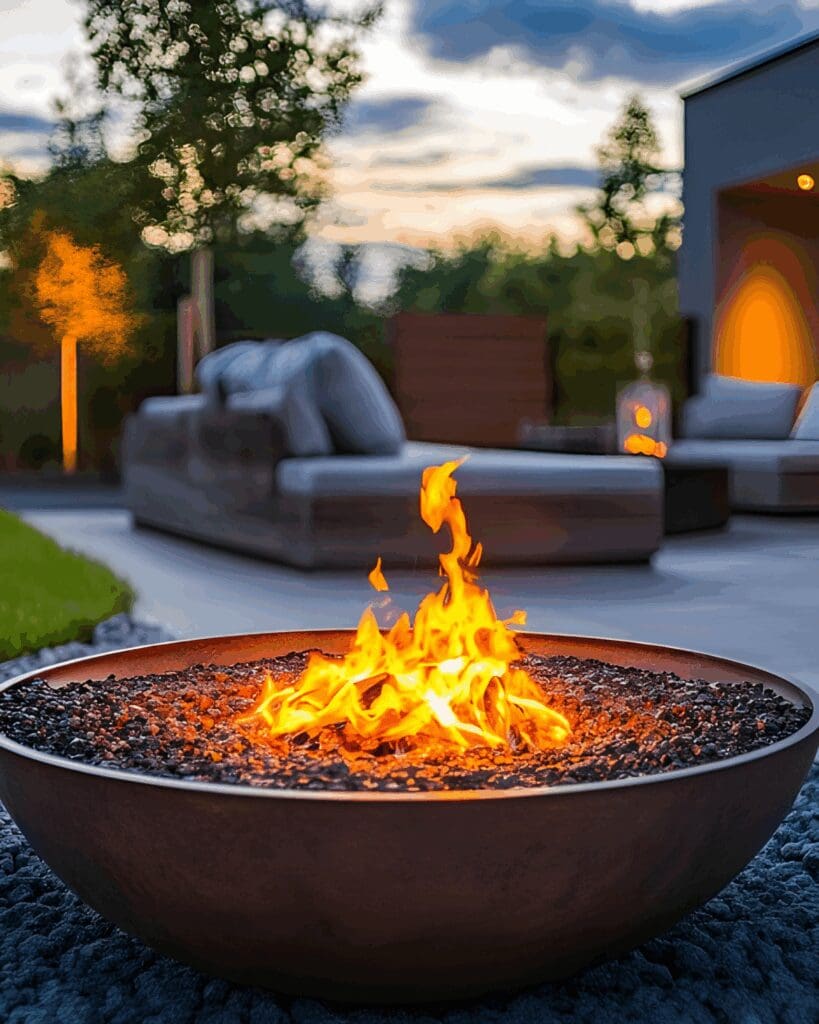
A fire pit instantly becomes the heart of any outdoor space and keeps the gathering going long after the sun goes down. There’s something about a crackling fire that naturally draws people in, sparks conversation, and invites a moment to slow down and reflect.
Active Living and Entertainment
Outdoor wellness isn’t just about quiet reflection—it’s also about movement and play. Activities like pickleball have exploded in popularity, offering a fun way to exercise while socializing. Lawn games such as cornhole, bocce ball, and croquet add entertainment value, especially for families and those who love to entertain.
Many of these game sets are now made from durable materials like HDPE (high-density polyethylene) and MGP (marine-grade polymer) that withstand the elements beautifully, requiring minimal maintenance while lasting for years.
Luxury Wellness Additions: Saunas and Cold Plunges
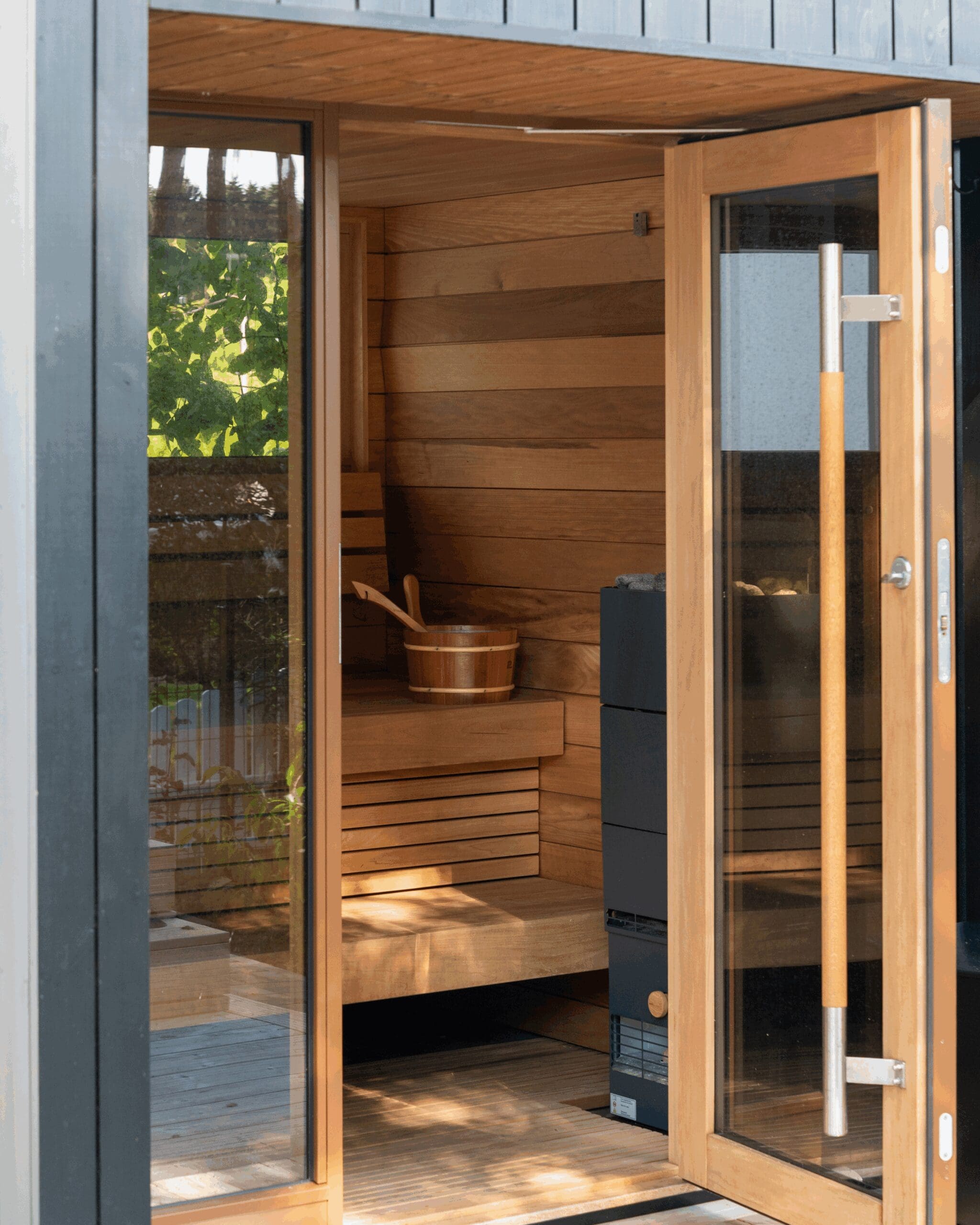
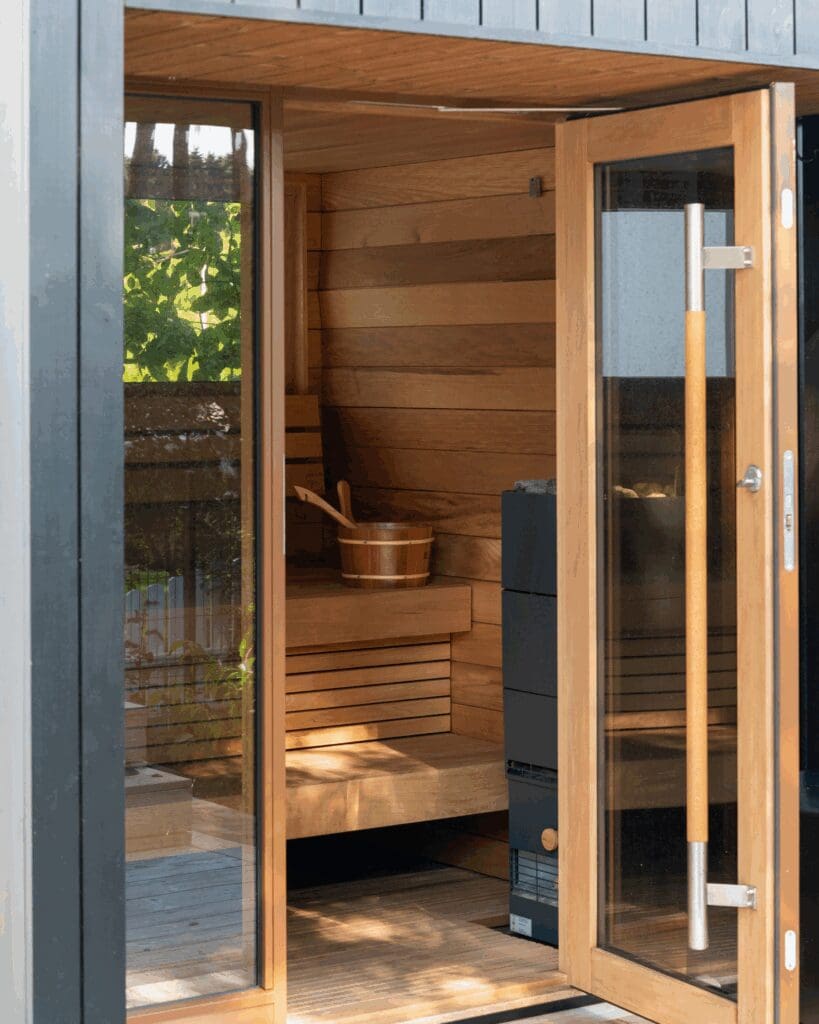
For those serious about outdoor wellness, consider incorporating dedicated health features. Outdoor saunas provide heat therapy benefits and create a spa-like retreat in your own backyard. Hot tubs offer hydrotherapy and relaxation. Cold plunge pools, once reserved for elite athletes, are becoming more accessible and popular for their inflammation-reducing and energy-boosting benefits.
Bringing it All Together
In our increasingly digital world, our outdoor spaces offer something vital to our well-being: a place to unplug, breathe deeply, and reconnect with what matters. Whether you’re designing a backyard sanctuary or simply adding a cozy reading nook, investing in your outdoor space is investing in your health, and it can be as simple or as elaborate as your budget and space allow. You might start with a comfortable seating area and a few potted plants, then gradually add elements that support your specific wellness goals.
So let’s get outside and raise those serotonin levels—one beautiful, intentional outdoor space at a time.

Comments Off on Neuro-Aesthetics & Biophilic Design: Creating Outdoor Spaces That Improve Health