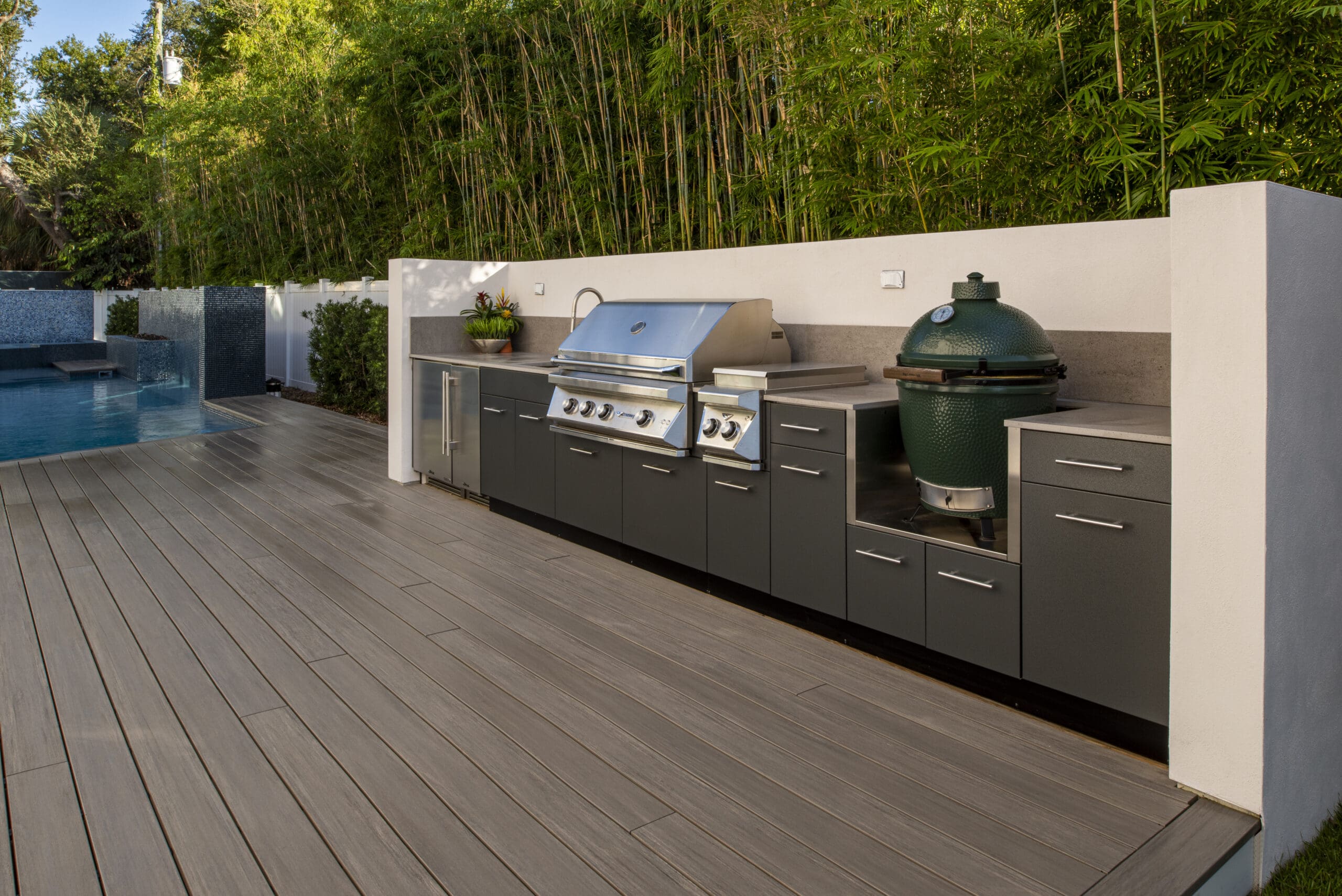
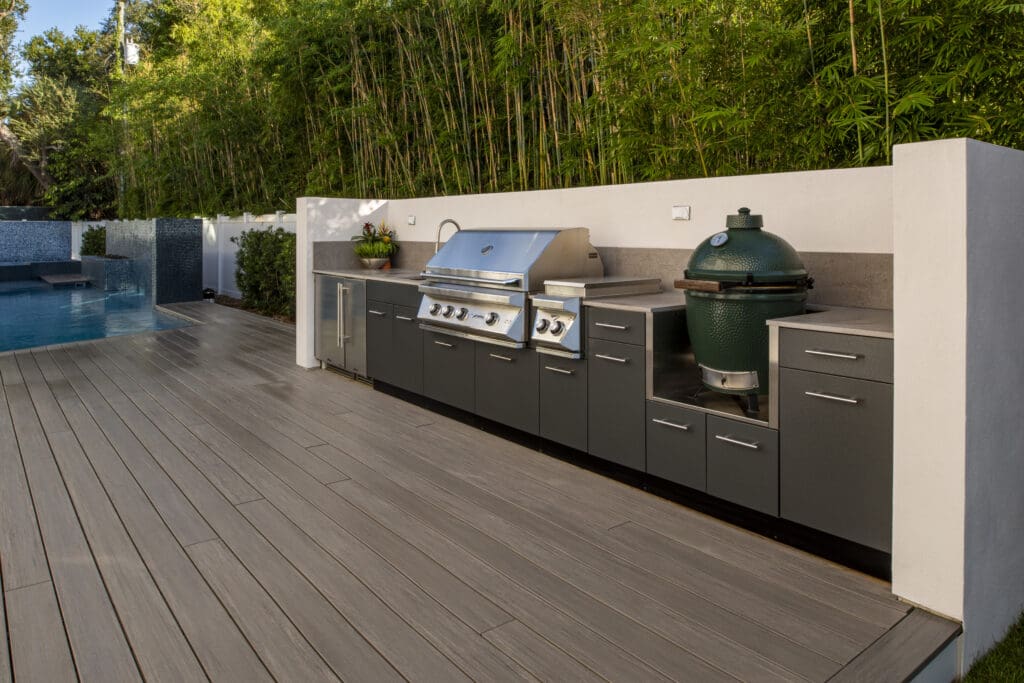
If you are looking to build an outdoor kitchen in 2026 and planning on hosting summer barbecues, then the time to start the process is now. Have you been imagining yourself hosting an alfresco dinner party or family barbecue with your new outdoor kitchen, but the thought of how to start is overwhelming? You see the polished-looking cabinetry, the gleaming appliances, and wonder which products are going to perform best for you and last more than a few seasons?
I can help you fill that gap of the unknown. When I work with you as a client, I will guide you through the design and selection process. We schedule a discovery call where we will go over a checklist before any decisions are finalized.
We discuss topics such as:
Placement:
- How much space do you have?
- What are the dimensions of the outdoor kitchen that you are planning?
- Are there spatial limitations that you need to fit into such as walls, edge of a deck, or between support posts?
- Will it be sheltered from the elements, or exposed?
Site Prep:
- Is there an existing surface to place the outdoor kitchen on?
- Is it level, or sloped?
- Can you easily connect to home utilities such as gas, water, and electrical?
- Will you need a permit?
How do you plan to use the space?
- Do you plan to cook often and need multiple appliances?
- Is it in close proximity and easily accessed to your indoor kitchen, or will you need prep and clean-up space?
- Do you plan to entertain and have a bar counter with barstools?
Appliances:
- Which appliances are you considering? There are numerous appliances on the market. The most popular are gas grills, power burners, griddles, flat-top grills, pellet grills, smokers, egg grills, sinks, and refrigerators.
Design Elements:
Similar to an interior kitchen, there are a plethora of design options available for your outdoor kitchen. The overall look and functionality of the space will be defined by these core cabinetry components:
- Configuration or layout
- Door styles
- Powder Coated finishes in solid or wood grain
- Handle and knob options
- Countertops and backsplashes
- Legs and toe kicks
- Drawer inserts
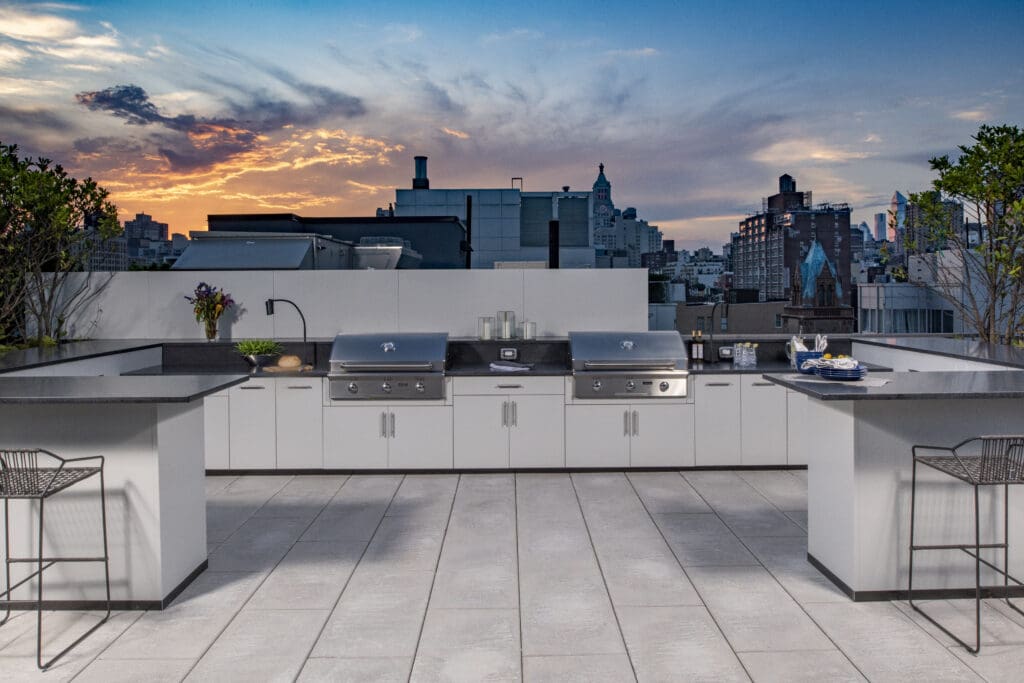
Let’s discuss these points in a little more detail.
Placement
If you’re working with an existing structure, the placement of your outdoor kitchen may already be dictated. In other cases such as a new build or open backyard, there may be multiple options.
If you are working within a fixed space, you will need to design your cabinetry around any spatial and structural limitations such as walls, exterior walls of the house, within support posts of a pergola or overhead structure, or edge of a deck or patio. With customized cabinetry this is easily accomplished. Cabinetry sizes are available in 3” increments, and fillers are available in virtually any increment.
You will also want to consider:
- Proximity to the indoor kitchen and ingress and egress–will your kitchen be self-sufficient? Or will you need quick access to your indoor kitchen for prepping, serving, cleaning, etc?
- Do you plan to use smokers and pellet grills? You may want to situate them farther away from the house and windows. If under a covered area, you will want to install a hood to help alleviate smoke from blowing into the house.
- How your outdoor kitchen will be situated in relation to other areas of your outdoor space such as a dining area, recreation, etc. For example, if you place it near a sportcourt and children are running around chasing balls nearby, that could be a safety hazard.
- Consider the vantage point—will you have a view of the outdoor kitchen from the inside? The angle and aesthetic that you choose will affect your view.
- Will your outdoor kitchen be exposed to the elements, or under a covered area? Consider heat, precipitation, wind, and sun glare.
- Where are your utility hook-ups located?
Prepare your site
One of the most underestimated factors I see with my clients putting in an outdoor kitchen is preparing the site. Before cabinetry is installed, the surface it sits on must be level, structurally sound, and properly reinforced to bear the weight of stone countertops and appliances. You will also want to confirm utility access — gas lines, electrical outlets, and water supply and drainage should ideally be roughed in before installation begins. Addressing these details early prevents costly delays and ensures a smooth installation process.
How do you plan to use the space?
This is an important question to ask before designing your outdoor kitchen in order for it to be functional. It is also the fun part, and where you can get creative and think about how you will be using your outdoor kitchen in the very near future. Do you imagine a group of friends sitting at your counter watching you grill away? Or an alfresco dinner party, complete with an outdoor bartending station? Maybe you want a chef’s dream and decide to include multiple appliances to create the perfect meal.
Cook
Of course, with a few exceptions most outdoor kitchens are built to house appliances, which are one of the biggest determining factors in the design of the cabinetry. The most popular appliance is a standard gas grill, but there are a number of other popular choices for cooking appliances:
- Gas Grill
- Pellet Grill
- Flat Top Grill/ Griddle
- Power Burner and Side Burner
- Egg Grill
- Pizza Oven
- Electric Grill
Prep
If you plan to use your outdoor space for food prep, you will need to allow an area with ample counter space. You may also want to consider cabinetry for storage of utensils and serveware nearby, as well as sink and trash cabinets.
Clean
One of my most frequently asked for non-appliance cabinets is the Trash Cabinet…it makes clean-up so easy, and eliminates an ugly trash can or running back and forth to the indoor kitchen. Sinks are necessary for both prepping and cleaning, and are a great addition to an outdoor kitchen. I have even had clients install outdoor dishwashers.
Refrigerate
Refrigeration is one of the most practical additions to an outdoor kitchen, and one I highly recommend. A dedicated outdoor refrigerator is so handy for storing marinades, prepped ingredients, and condiments. It also keeps you from running back inside every time you or your guest needs a cold one. Be sure to specify a unit that is rated for outdoor use — indoor refrigerators are not built to withstand temperature fluctuations and humidity.
Store
How much storage will you need, and what do you plan to store? The cabinetry that I recommend allows virtually 100% usable space for storage. Door and drawer cabinets are great for storing pots and pans, dishes and serving ware, utensils, and linens. Will you need more storage for larger items such as propane tanks, coolers, outdoor cushions?
Entertain
Why limit your outdoor kitchen to cooking and cleaning? Adding a bartending sink, complete with a speed rail and bottle well could add some flair and come in handy if you like to entertain. A bar counter with counter stools is a great way to include others while you are cheffing it up. I have even had clients install kegerators in their outdoor kitchen.
Design
Now that you have thought about where your outdoor kitchen will be located and how you’ll be using it, it’s time to create the design.
The style of your home will no doubt factor into the overall aesthetic, whether you are going for traditional, minimalistic, modern mediterranean, industrial, or coastal contemporary. You can create the ideal outdoor kitchen to complement your space.
Configuration/ Layout
- Think about which design layout will work best for your space and appliances–Straight, L-shaped, U-shaped, or Galley are the standard layouts.
- Be aware of spatial limitations and door swing…you will want to allow for a minimum of 42” aisle width.
Cabinetry Styles
- Door styles can create vastly different looks. Choose from classic shaker, bead board, flat solid panel, wood and glass inserts, and more.
- Choose your finish in a variety of solid powder coated colors, wood grain finish, or an industrial looking stainless steel.
- Will you want handles and knobs, or pulls? There are multiple options, including stainless steel, brushed bronze, and more.
Countertops
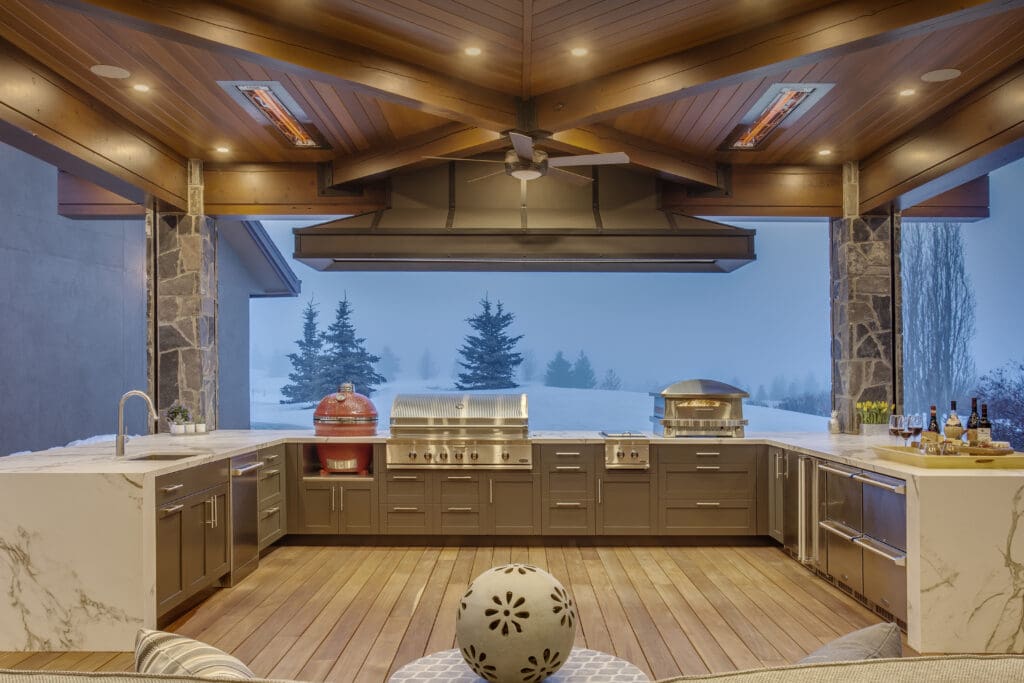
Your countertop choice should balance aesthetics with durability — outdoor surfaces face UV exposure, heat, and moisture that would compromise many interior materials. I always steer my clients toward materials that are tested for outdoor use and require minimal maintenance, so you spend more time enjoying the space and less time maintaining it. My top recommendations are honed granite and sintered stone such as Dekton.
Popular choices include;
- Granite
- Quartzite
- Lavastone and Basalt
- Soapstone
- Sintered Stone
- Porcelain
- Stainless Steel
- Concrete
Installation:
You’ve done the hard work of planning and designing your dream outdoor kitchen — now it’s time to bring it to life, I always recommend having a licensed contractor install the cabinetry. They can ensure that gas, electrical, and plumbing connections meet local code requirements, verify proper ventilation for appliances, and confirm that the structure is safely anchored and level. Proper installation protects your investment and, most importantly, keeps your family and guests safe.
Building a high-performance outdoor kitchen is an investment, but a very rewarding one. When done right, it can add significant value and become one of the most enjoyed areas of your home.
That is exactly what I do for my clients. I take the guesswork out of the process and guide you from the very first discovery call through to final installation, so you can focus on what really matters — enjoying the space you have always envisioned.
Ready to get started? Let’s talk.

Be The First To Comment